International Schools in Hong Kong 2026/27: ESF, British, American, IB, Fees and Debentures
Quick Answer: Hong Kong had 52 international schools teaching 44,745 pupils in 2025/26, two thirds of them non-local. Published 2026/27 tuition runs from HK$145,000 at ESF to HK$279,100 in the Kellett sixth form, and most independent schools add a capital levy of HK$35,000 to HK$60,000 a year or expect a debenture. Here is how the four groups compare and how admission works.
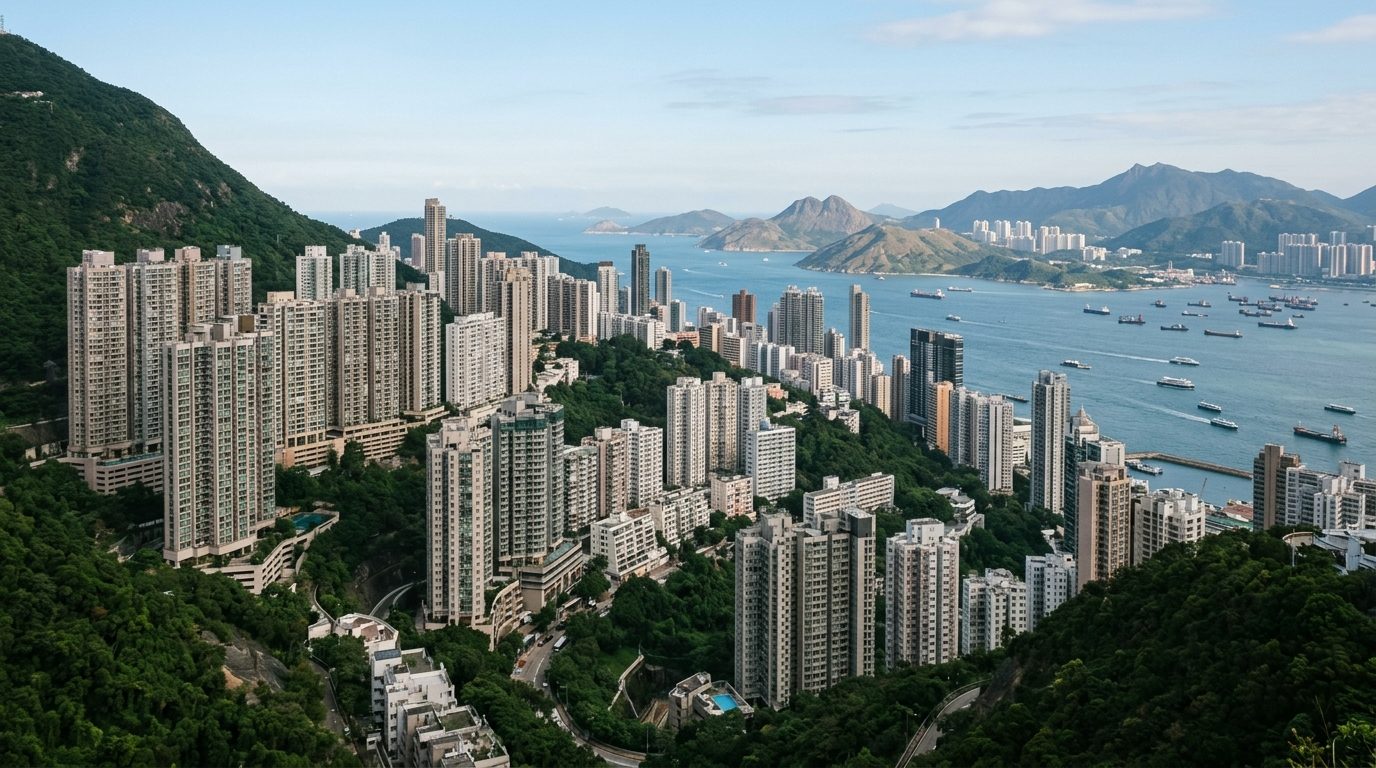
Hong Kong has 52 international schools teaching 44,745 pupils, two thirds of them non-local, according to the Education Bureau's own statistics for 2025/26. Published 2026/27 tuition runs from HK$145,000 in an ESF primary year to HK$279,100 in the Kellett sixth form, and most schools outside ESF add a capital levy of HK$35,000 to HK$60,000 a year or expect the family to hold a debenture worth six or seven figures. This guide sets out the four groups of school, explains what a debenture actually is and why Hong Kong relies on them, compares the published fees, and covers how to apply. Start with the directory listing for Hong Kong schools.
What are the four groups of school?
The Education Bureau describes the sector as "very diverse and designed for meeting the needs of non-local families, particular cultural or linguistic groups, and/or whose students do not wish to sit for local examinations", and notes that international schools are private, self-financing and market-driven.
ESF is the largest single provider, running primary and secondary schools plus two private independent schools and a group of kindergartens. Its secondary schools include Island School, King George V School, Sha Tin College, South Island School and West Island School, with Renaissance College as a through-train.
Independent British schools cover Harrow, Kellett, Shrewsbury, Nord Anglia and Malvern College. American schools are led by Hong Kong International School and Stamford American. The IB and other national group is the broadest, taking in CDNIS, German Swiss, the French International School, Victoria Shanghai Academy and the ISF Academy. If the curriculum rather than the group is the deciding factor, see IB Diploma versus A Levels versus AP.
What is a debenture, and why does Hong Kong use them?
A debenture is a large, interest-free sum a family or company lends the school, usually redeemable when the child leaves, in exchange for priority in admission. A capital levy is the alternative: a smaller annual charge, non-refundable, that everyone without a debenture pays. Both exist because Hong Kong international schools are self-financing and must raise building capital themselves.
The practice is regulated. EDB Circular No. 15/2023, issued 22 August 2023, defines "other charges" as "charges such as capital levies, debentures and nomination rights fees collected by private schools to raise funds for long-term school development", and states that under regulation 61(1) of the Education Regulations (Cap. 279A) no school may charge them without the prior approval of the Permanent Secretary for Education. Tuition is controlled separately: in a Legislative Council reply of 10 July 2024 the Government confirmed that "in accordance with Regulation 65 of the Education Regulations (Cap. 279A), no change in fees shall be made by all schools (including international schools) without the prior written approval of the EDB".
The amounts are real money. Kellett requires every pupil to be covered by a debenture or the annual capital levy of HK$40,000, with a corporate debenture at HK$1,000,000. HKIS offers a Family Debenture at HK$3 million and a comprehensive corporate debenture at HK$5 million, while stressing that debentures "are not mandatory and do not guarantee admission" and that only the Family Debenture is transferable, to the buyer's children or grandchildren. The French International School sets its private debenture at HK$120,000 and the corporate version at HK$250,000.
What are the 2026/27 fees across the groups?
Annual tuition from each school's own 2026/27 schedule, checked September 2026. HKIS publishes per semester, so its annual figure is double the semester rate.
| School | Group | Lowest year | Top year | Capital charge |
|---|---|---|---|---|
| ESF primary and secondary | ESF | HK$145,000 (Years 1-6) | HK$174,200 (Years 12-13) | Capital levy HK$38,000 at Year 1 entry, sliding to HK$3,800 |
| Harrow Hong Kong | British | HK$182,493 | HK$248,155 (Years 12-13) | Capital levy HK$60,000 a year |
| Kellett School | British | HK$218,200 (Prep) | HK$279,100 (Sixth Form) | Capital levy HK$40,000 a year, or a debenture |
| Hong Kong International School | American | HK$231,600 (R1-G2) | HK$272,600 (G9-12) | Capital levy HK$24,500 a year |
| CDNIS | IB | HK$217,200 | HK$261,500 (G11-12) | Capital levy HK$43,000 a year, or a debenture |
| French International School | Other national | HK$156,729 | HK$224,298 (Years 12-13) | Debenture HK$120,000 private, HK$250,000 corporate |
ESF is the value option and the reason the market has a floor. Its 2026/27 fee levels are HK$145,000 for Years 1 to 6, HK$188,300 for Years 7 to 11 and HK$174,200 for Years 12 and 13, and the page notes that Year 11 becomes non-subvented in 2026/27. Independent British and American schools sit HK$40,000 to HK$100,000 a year above that, before the capital charge. Add the levy and the real gap widens: a Year 1 place at Harrow costs HK$60,000 a year more than the headline tuition suggests. For the general anatomy of these bills, see international school fees explained, and for how the region compares, Singapore and Macau.
How do you apply?
ESF runs a single central round rather than rolling admission. Its admissions page gives an application period of 1 to 30 September 2026 for Year 1 or Year 7 entry in August 2027, and says applications received after 30 September 2026 are treated as late and waitlisted by category and date. Nomination rights, corporate and individual, buy interview priority within that queue. Independent schools take applications directly and often years ahead; HKIS sets 1 November as its debenture application deadline for the following school year.
- Work out which queue you are in. ESF prioritises by category, so a sibling or a nomination right matters more than the application date.
- Cost the levy, not the tuition. A HK$60,000 annual levy over thirteen years is larger than most one-off deposits.
- Read the redemption terms. A debenture is only refundable on the conditions printed in its own terms, and most are not transferable on the open market.
- Check the accreditation and the exit exam before the campus tour. How accreditation works explains what the badges mean.
- Apply in September for the year after next if ESF is your first choice. There is no second round.
Frequently asked questions
- What is a school debenture in Hong Kong?
- A debenture is a large interest-free sum a family or company pays a school, generally redeemable when the child leaves, in return for priority in admission. Hong Kong international schools are self-financing, so debentures and capital levies are how they fund buildings. EDB Circular No. 15/2023 classes capital levies, debentures and nomination rights as other charges that a school may not collect without the prior approval of the Permanent Secretary for Education under regulation 61(1) of the Education Regulations.
- How much are international school fees in Hong Kong for 2026/27?
- ESF publishes HK$145,000 for Years 1 to 6, HK$188,300 for Years 7 to 11 and HK$174,200 for Years 12 and 13 in 2026/27. Independent schools are higher: Harrow Hong Kong publishes HK$182,493 at the youngest year and HK$248,155 in Years 12 and 13, Kellett HK$218,200 in Prep and HK$279,100 in the sixth form, and CDNIS HK$217,200 rising to HK$261,500 in Grades 11 and 12. Capital levies are charged on top.
- Do you have to buy a debenture to get into a Hong Kong international school?
- Not usually, but you will pay a capital levy instead. Kellett requires every pupil to be covered by either a debenture or its annual capital levy of HK$40,000. CDNIS applies the same rule with a levy of HK$43,000 a year. Harrow charges HK$60,000 a year to pupils without a capital certificate or debenture. HKIS states plainly that its debentures are not mandatory and do not guarantee admission, and it charges all pupils a capital levy of HK$24,500 a year.
- Is ESF cheaper than other international schools in Hong Kong?
- Yes, by a clear margin. ESF's 2026/27 primary fee of HK$145,000 is well under half what several independent British and American schools charge, and its capital levy is a one-off of HK$38,000 at Year 1 entry, falling on a sliding scale to HK$3,800 for later entrants, rather than an annual charge. ESF also runs a single central application round instead of rolling admissions, which makes places harder to secure at short notice.
- Can a school raise its fees whenever it likes?
- No. The Government confirmed in a Legislative Council reply on 10 July 2024 that under Regulation 65 of the Education Regulations (Cap. 279A) no change in fees may be made by any school, including an international school, without the prior written approval of the Education Bureau. Schools proposing an increase must apply and justify it, for example by rent or salary increases. Capital levies and debentures fall under a separate approval regime in regulation 61(1).
- How many international schools are there in Hong Kong?
- The Education Bureau's statistics page records 52 international schools for 2025/26, made up of 16 primary, 7 secondary, 28 primary cum secondary and one special school. Together they offer 48,413 places and teach 44,745 pupils, excluding the special school. Non-local students make up 66.2% of enrolment and local students 33.8%. The EDB's separate sector page lists 53 international schools, some operating on more than one campus.
- When do applications open for Hong Kong international schools?
- ESF's central application for Year 1 and Year 7 entry in August 2027 runs from 1 to 30 September 2026, and anything received after 30 September 2026 is treated as late and waitlisted by category and date received. Independent schools take applications directly and accept them much further ahead, often from birth for the earliest year groups. HKIS requires debenture applications for the coming school year by 1 November of the current year.